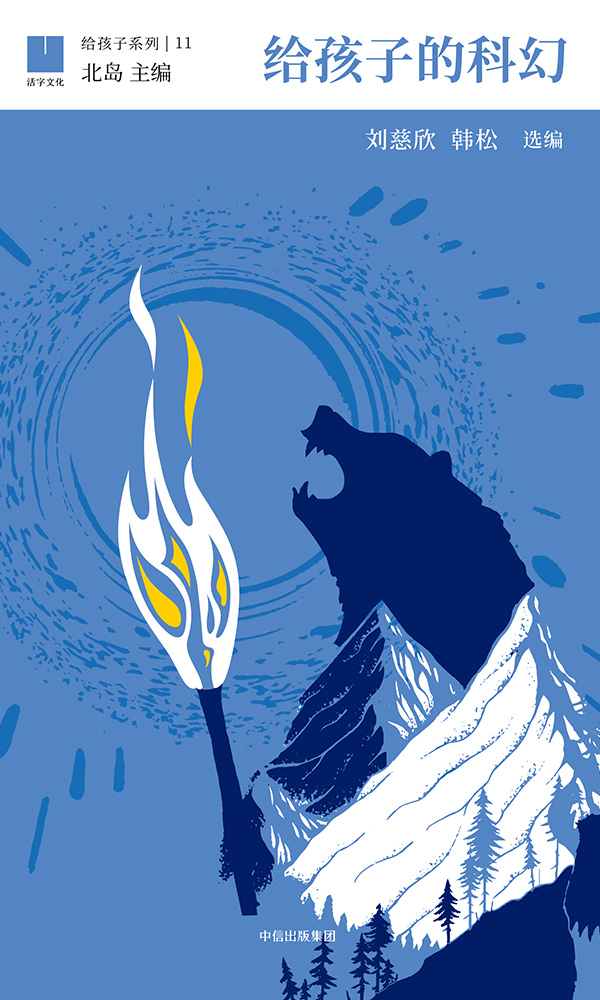
Science Fiction for Children
Overview
Science Fiction for Children is a collection of short science-fiction stories that form part of a broader children's book series known as Books for Children in China. The series is curated with the intent of introducing young readers to the expansive and imaginative world of science fiction, combining educational value with entertainment. The collection is notable for featuring works from both classic and contemporary science fiction writers, and aims to inspire as well as prepare children for the vast possibilities of the universe.
Concept and Creation
The collection was launched with the involvement of prominent figures in the literary and academic world, including two of China's top science-fiction writers, Liu Cixin and Han Song, alongside poet Bei Dao and cultural critic Dai Jinhua from Peking University. Bei Dao serves as the editor of the series, while Liu and Han contributed by selecting the stories included in the book. This collaboration highlights the interdisciplinary effort to create a collection that is both intellectually stimulating and accessible to children.
Content and Themes
Science Fiction for Children comprises 15 short stories ranging from the 1950s, considered a golden age for science fiction, to contemporary pieces. The collection includes works from well-known authors such as British writer Arthur Clarke and American writers Ted Chiang and Ken Liu. Stories such as The Wind from the Sun by Arthur Clarke, A Walk in the Sun by Geoffrey Landis, and Cosmic Spring by Ken Liu are part of this anthology.
The collection embraces a dual thematic approach. Liu Cixin emphasizes hard science fiction with a focus on technology and the tangible future, while Han Song delves into philosophical questions about humanity's capacity to conquer nature. This blend of themes allows young readers to explore both the external advancements of humanity and the internal reflections on human nature and its place in the universe.
Literary Contributions and Philosophical Insights
Liu Cixin, in his preface, contrasts science fiction with fairy tales, arguing that the former will increasingly align with reality. He advocates for science fiction as a tool to expand children's imaginations and prepare them mentally for future possibilities. Stories like Tom Godwin's The Cold Equations introduce children to harsh truths about the universe and human limitations, challenging them to contemplate profound concepts such as equality in the face of physical laws and the inevitability of death.
Han Song's selection of The Cold Equations reflects his belief in the necessity of introducing children to concepts of loneliness, death, and frustration. These themes are vital for building resilience and understanding the complexity of existence.
Aesthetic Divergence and Future Outlook
Dai Jinhua comments on the contrasting styles of Liu and Han, with Liu's work focusing on practical and imaginative narratives that explore outer space, and Han's work probing the human psyche when confronted with an ever-evolving reality. Han points out the growing anxiety associated with rapid technological advances, such as information technology, artificial intelligence, and virtual reality, which contribute to an inward-focused cultural shift.
Liu Cixin expresses concern over the trend of "inward exploration" in contemporary science fiction writing, contrasting it with the outward-looking, adventurous spirit of past decades. He warns that as technology enables a more insular experience of the world, the drive for interstellar exploration may diminish, potentially leading to a future devoid of space travel. Despite this, he maintains that a future without interstellar travel is bleak, highlighting the importance of maintaining a sense of adventure and exploration in science fiction.
Educational Implications
Science Fiction for Children serves not just as a literary collection but as an educational tool that encourages critical thinking and curiosity among young readers. By presenting a variety of narratives and philosophical questions, the collection aims to foster a deeper understanding of both scientific principles and the human condition. The book's diverse selection of stories provides a comprehensive introduction to the genre, encouraging children to explore the limitless possibilities that lie beyond their immediate reality. Article reference1. When sci-fi is child's play. chinadaily.com.cn. 2018Photo Gallery(4 pictures)CategoriesLiteratureTagModern and Contemporary LiteratureAnimationCatalogue1. Overview2. Concept and Creation3. Content and Themes4. Literary Contributions and Philosophical Insights5. Aesthetic Divergence and Future Outlook6. Educational Implications- - - []








